
OCDC Release Routes
The Otero County Detention Center, often called OCDC, is the county-custody starting point in Alamogordo. It houses people awaiting a court disposition and people serving eligible local terms. A departure can follow bond, a court order, dismissal, time served, or sentence completion. It can also reflect a move to treatment, court-approved community custody, another jail, state prison, or a different authority. Those outcomes do not carry the same legal meaning.
The key record is the jail movement or booking and release entry. It should identify the actual physical departure and the disposition used by the facility. The issuing court record then explains why jail staff had authority to act. If another agency took custody, the destination matters as much as the departure time. A person who left OCDC for the Otero County Prison Facility remains confined in the New Mexico Corrections Department system.
Community custody is also distinct. Otero County permits approved pretrial or sentenced participants to remain outside the detention center under daily electronic monitoring. Weekend commitments create planned periods outside the jail between court-ordered reporting intervals. Neither status should be labeled final discharge without the commitment order and final release entry.
Confirm an OCDC Release
Otero County publishes no official current jail roster, booking search, or released-person archive identified in the research sweep. There is no verified online tool that can supply an OCDC release date. Start with a direct facility check, then move to the documentary sources. The broader Otero County released inmate search explains how county, state, court, notification, and federal records fit together when custody is uncertain.
- Call OCDC and ask whether the named person remains physically housed, departed, or transferred. Use a full name and another known identifier to reduce same-name mistakes.
- Search the New Mexico Courts Case Lookup for the related matter. Identify the court, case number, and the filed order that authorized bond, release, commitment, dismissal, or transfer.
- Submit a written county IPRA request for the booking sheet, actual release date and time, release disposition, releasing authority, and transfer destination when applicable.
- Check the next custody system if the record points elsewhere. A state transfer belongs in NMCD, while an immigration handoff belongs in the ICE locator and case route.
- Resolve any conflict with the agency that created the record. A portal lag, spelling issue, later hold, or sealed case can leave sources out of sync.
New Mexico Courts Case Lookup can show the case and register of actions. Obtain the signed or file-stamped order from the proper clerk when the exact authority matters. The order may precede final jail processing, and another valid hold can stop a community release. For that reason, the court record and OCDC departure entry answer different parts of the same question.
Note: A bond order begins the legal process, but the OCDC movement record best confirms when physical custody actually changed.
Request OCDC Release Records
Use the county’s Inspection of Public Records Act request page for a traceable records path. The request form asks for the requester’s name, address, telephone number, and a description detailed enough to locate the material. Identify the former detainee by full name and, when known, date of birth, booking number, and custody date range. Address the request to the current Records Custodian rather than relying on a staff title that may change.
| Record item | What it can establish |
|---|---|
| Booking sheet and number | The specific OCDC admission tied to the request |
| Admission and release times | The recorded span of physical county custody |
| Disposition and destination | Community release, transfer, treatment, or another route |
| Authority or order | The court, bond record, or agency action supporting departure |
| Transfer details | The agency or facility that received the person |
| Releasable booking image | The admission image, subject to current disclosure law |
Ask for electronic copies and request reasonably segregable, nonexempt material if part of a file is withheld. New Mexico IPRA allows redaction or withholding where another law protects the information. Juvenile, medical, victim-identifying, sealed, expunged, protected law-enforcement, and security-sensitive details may require special treatment. A precise request is easier to search and less likely to gather unrelated records.
The disposition and destination fields deserve separate wording in the request. “Released” without a destination may hide the central fact when another jail, NMCD, treatment program, or federal authority received the person. Ask for any amended or corrected entry that changed the first release notation. If a court order and jail time differ, request both instead of choosing one. The filed order establishes legal authority, while the OCDC record tracks the physical movement after staff checked paperwork and holds. This paired approach also helps with weekend commitments, where a person can be outside the building between required intervals, and with community custody, where a participant is outside a cell but still subject to court-approved monitoring.
The county states that inspection must be immediate or as soon as practicable, with the ordinary response framework extending no later than fifteen calendar days. When immediate inspection is unavailable, the custodian provides a written timing explanation within three business days. Posted copy charges may apply, so ask whether electronic delivery changes the cost before requesting paper.
OCDC Release Contact
The detention center is the first contact for a narrow custody or departure check. The County Manager’s records office is the formal route for the retained booking and release file. Otero County does not publish a general release-processing schedule, release door, pickup area, transportation service, or records-counter hours for OCDC. Call before traveling to either office.
Otero County Detention Center
1958 Business Center Blvd.
Alamogordo, NM 88310
Phone: 575-437-6420
Fax: 575-443-2946
Call for current information.
Otero County Records Custodian
County Manager’s Office
1101 New York Avenue, Room 106
Alamogordo, NM 88310
Phone: 575-437-7427
Fax: 575-443-2928
The facility phone may confirm whether a person is still housed or direct the caller to the correct unit. It does not replace a written record when exact time, disposition, or destination must be documented. Keep the request limited to the custody event and the specific booking period.
OCDC Property and Release
Otero County’s inmate property rules create a useful but limited clue. OCDC inventories and secures property during custody. A detainee may authorize a named recipient on a Property Release Form, and that recipient must present valid photo identification and sign for the items. The county advises arranging property release before a transfer to NMCD or treatment.
That advance transaction can point toward a transfer, not freedom. It should never stand alone as proof of release. The property page states that unretrieved items may be disposed of after seven days and lists front-office or main-lobby property service on weekdays during posted hours, excluding holidays. Those are property-counter hours only. They are not OCDC inmate release hours.
- Release
- A documented end to physical custody at OCDC, with a stated disposition.
- Transfer
- A move from OCDC into another agency’s custody.
- Community custody
- Court-approved placement outside the jail with daily electronic monitoring.
- Weekend commitment
- A sentence served in set reporting intervals rather than one continuous stay.
Note: Property pickup may support the timeline, but only the jail movement record identifies the legal custody outcome.
OCDC Release Source Check
The county’s official detention center page identifies OCDC and supplies its public contact details. It does not contain a public release widget or former-detainee archive.
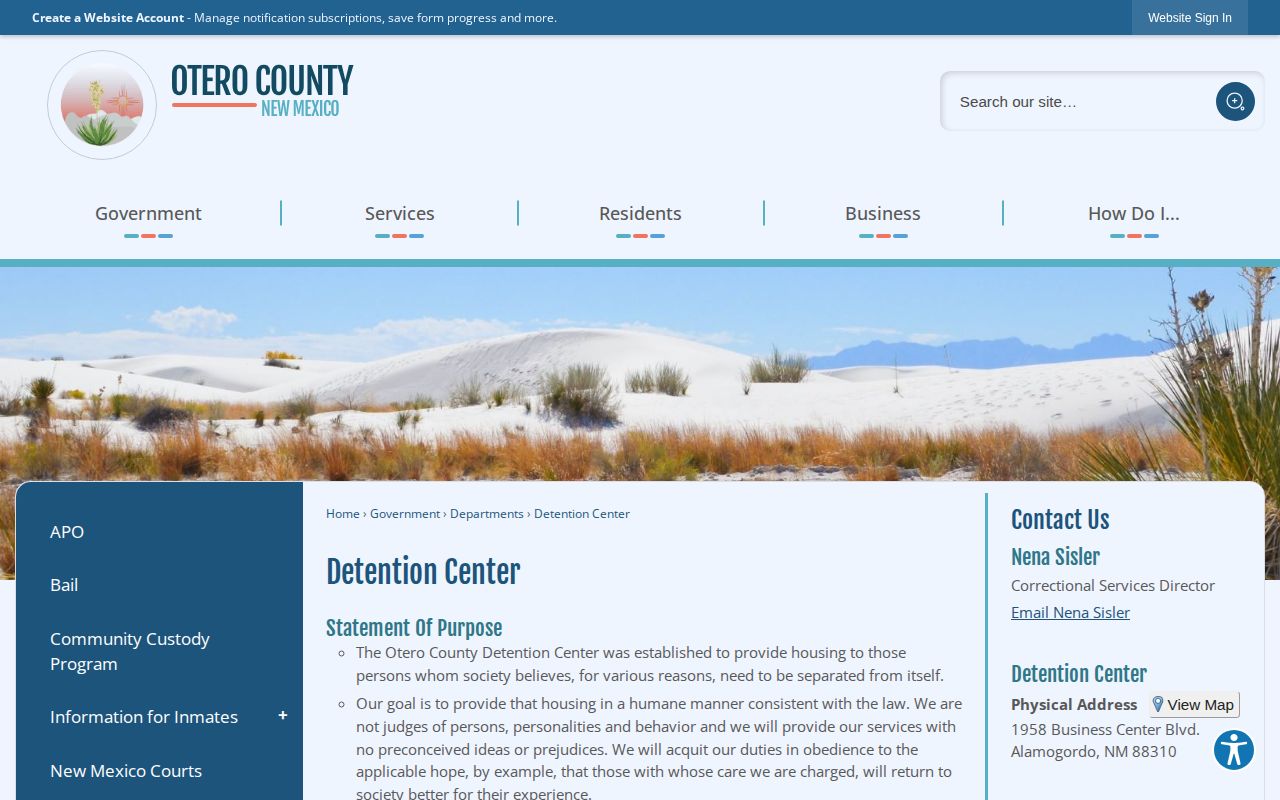
The captured source supports the facility identity and direct contact route. It does not prove that any named person was released, so an individual inquiry still needs the phone, court, and IPRA steps.
Otero Facility Release Systems
Three facilities with similar names serve Otero County, yet their records cannot be swapped. OCDC is the county detention center in Alamogordo. The Otero County Prison Facility is an NMCD state prison in Chaparral, although “County” appears in its name. The Otero County Processing Center, also in Chaparral, is a county-owned and privately operated civil immigration detention center under ICE oversight.
| Facility | Custody system | Correct release evidence |
|---|---|---|
| OCDC | Otero County detention | Facility check, county booking/release record, court order |
| OCPF | New Mexico state prison | NMCD search, release audit, parole or discharge record |
| OCPC | ICE civil immigration detention | ICE locator, ERO confirmation, immigration case record |
A newly sentenced person may leave OCDC and later appear as active in NMCD after intake processing. That movement is a county-to-state transfer. It is not release to the community. The Otero County Prison Facility release page uses the state offender and records channels for that separate custody path.
Likewise, a handoff tied to an immigration hold requires ICE verification. A release entry should be read through its disposition and destination fields, not through the simple fact that the person departed OCDC. That distinction is the strongest safeguard against a false release conclusion.